
I am an author, feminist, brand strategist, and designer at Unbuttoned Brands. I believe your brand should look and sound as good as the impact you're making. It's why I help values-driven businesses build bold brands that feel unmistakably like YOU, because being yourself is the strategy™.
TAKE THE BRAND VIBE QUIZ 👇️
BRAND DESIGNBRAND STRATEGYBRAND VIBEBRANDINGPERSONAL BRANDINGREAL TALKHey, I'm Emily!

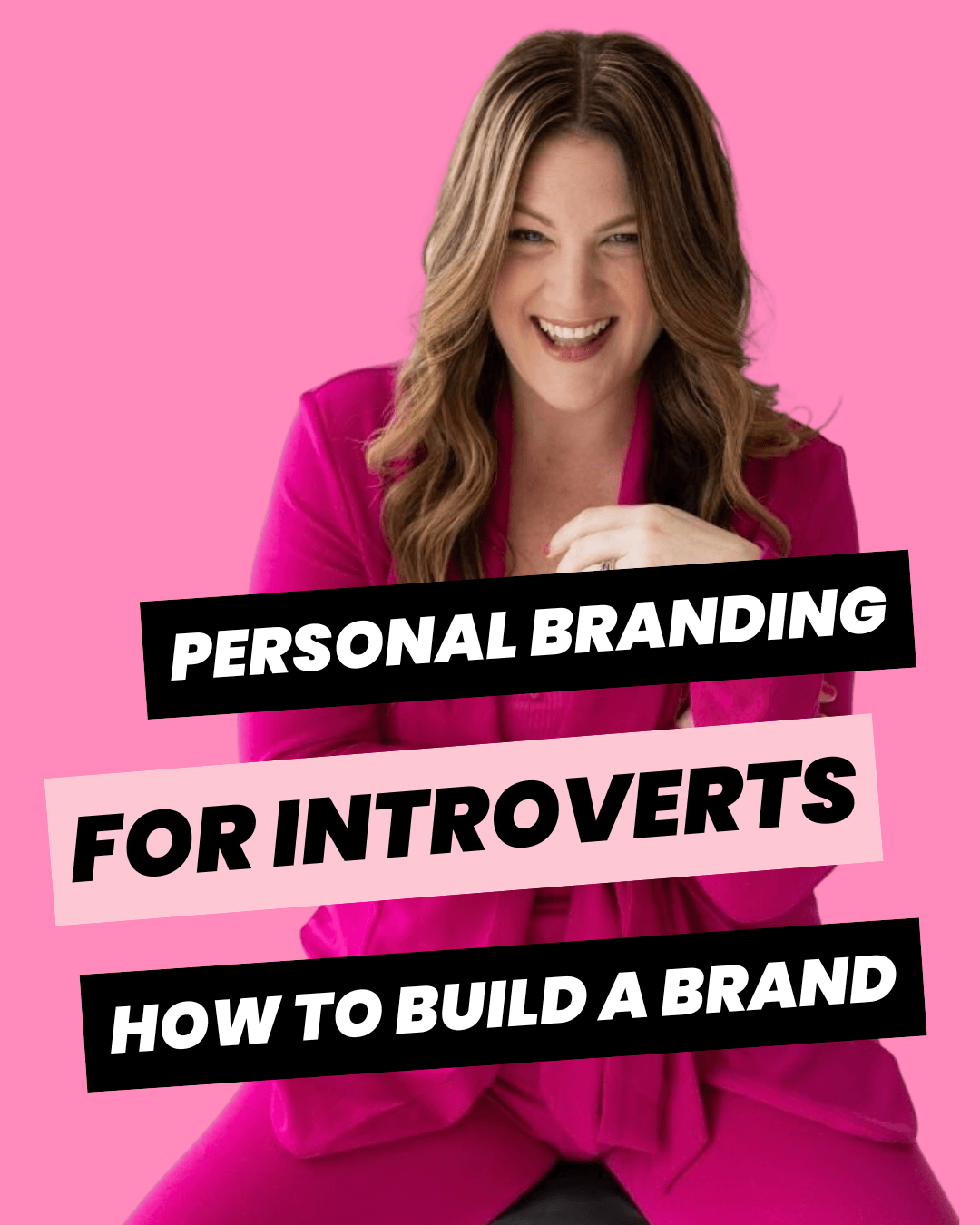
Personal Branding for Introverts: How to Build a Brand Without Being Loud
LAST UPDATED: November 2026
Personal branding for introverts is about building a brand around how you like to show up, then choosing visibility that fits your energy.
If you’re an introvert in business, you’ve probably been told to post every day, go on camera, and “put yourself out there.” I’m an introverted and sensitive person myself, so I get why that advice makes your stomach drop.
Here’s what I believe after years of building brands: personal branding for introverts isn’t about being louder. It’s about getting clearer, so the visibility you do choose is shorter, easier, and sounds like you. (Bold and visible is still on the table, by the way. You just get to pick the volume.)
Do introverts have to act like extroverts to be visible?
No! You need a clear message and a way of showing up that you can repeat, and neither one needs a big ol’ extroverted personality.
In my experience, people remember the brands with the clearest message, and that has little to do with who posts the most or who’s on camera the most. A quiet brand with a sharp point of view gets repeated to friends.
What drains introverts is the daily posting treadmill with nothing clear to say. Once you have one clear point of view, sharing it gets a lot easier. Small, chosen doses of visibility often feel better than you expect.
What does personal branding for introverts actually look like?
It looks like a brand built on your values and your voice, with a short list of places you show up on purpose. Your brand strategy decides what you say; your energy decides where and how often you say it.
For a lot of introverts, that means writing over live video, one-to-one conversations over big rooms, and scheduled content over anything that needs you to perform in the moment. It also means skipping some of the standard advice without guilt.
If you want a deeper look at the brand personality piece, I wrote about how to find your branding personality without copying anyone.
How do you build a personal brand as an introvert?
Step 1: Write your visibility list! Make two lists on one page. Under “Charges me up,” write the ways of connecting that leave you with energy, such as writing, one-to-one chats, or recorded audio. Under “Drains me,” write what leaves you flat, such as live video, cold DMs, or big networking rooms. Your brand objectives live mostly in the first list. Pull from the second one only on purpose, in small doses.
Step 2: Write to one person. Pick one real client or ideal client and finish this sentence in a message to them: “The thing I wish you knew about [your topic] is…” Write three or four sentences and skip the hook. That message is your first piece of content, and it will sound like you because you wrote it to a person, not a crowd. Repeat it each week with a new ending to the sentence.
Step 3: Choose two places to show up, and only two. Pick one place where people find you (a blog, Pinterest, or search) and one place where people hear from you regularly (an email list or LinkedIn). Skip the rest for now. Two channels you keep up with are worth more than six you abandon.
Step 4: Batch it and protect your recovery time. Block one quiet morning a week to write, and schedule everything else. Set a 20-minute window each day for replies and comments, so you aren’t on call all day.
Step 5: Plan one stretch a month, then recover. Pick one visible thing, such as a podcast conversation, a guest post, or a short live Q&A, and put it on the calendar with a recovery day after it. A planned stretch feels very different from being ambushed by one. Write a two-line intro you can reuse so you aren’t improvising, and use my post on how to explain what you do to shape it.
What does this look like in practice?
Take a landscape designer two years into their business. They’d been told to film daily videos and show up at every local networking event, and after a month of forcing it, they went quiet online and felt like a fraud for stopping.
In our brand strategy work together, we start with a questionnaire about how they like to work, what they believe about their field, and who they most enjoy helping.
What we found was that they feel their best in one-to-one conversations and when explaining a plan in writing.
They made the decision to shift to a weekly branded email that walks through one real design decision, a simple guide sent to every new inquiry, and one planned speaking spot a quarter.
They stopped asking “Am I loud enough?” and started asking “Is this clear?” Each piece got simpler to write because they already knew who it was for and what they believed.
Ready to build your own?
If you want the full picture first, start with my post on how to build a personal brand that actually feels like you.
If you’d rather go step by step, my course walks you through the same brand strategy framework I use with my 1:1 clients. It includes 6 short video modules, guided prompts and templates, and a finished brand strategy document at the end, with lifetime access.
Want to build it at your own pace? Check out the Being Yourself is the Strategy course →
Personal branding for introverts FAQs
Can introverts build a personal brand without going on camera?
Yes. Writing, audio, email, and still images can carry a full brand. Video is one format among many, and you can add it later in small, planned doses if you want to.
How often should an introvert post content?
Often enough to repeat your message, and no more than you can keep up. In my experience, one strong piece a weekly (or even bi-weekly) beats daily posts you dread making. And that doesn’t have to be social media content. It could be a weekly email or audio series! Whatever feels best to you.
Is being an introvert a disadvantage in personal branding?
No. In my experience, introverts are strong listeners and careful thinkers, which means they really care about their one-to-one client relationships. Just because you enjoy smaller circles, and need extra recovery time, doesn’t mean you aren’t capable of being a big voice in your industry. Remember, big doesn’t have to mean loud and obnoxious. You get to decide!
What is the best platform for introverts?
The one where you can write or record on your own time. For most people that’s an email list, a blog, Pinterest, or LinkedIn, because none of them need you to perform live.
How do I handle networking and sales calls as an introvert?
Prepare a two-line intro, three questions to ask, and an exit line, and then schedule a recovery block afterward. Having the words ready takes the pressure off improvising.
How long does it take to build a personal brand?
The foundation takes a few focused sessions to write down. Yoir reputation builds over months of repeating the same message in the same places!

Emily Lauren Dick is an author, feminist, personal brand strategist, and designer and the founder of Unbuttoned Brands, a bold brand studio for entrepreneurs who want to make money and make the world a better place. She helps values-driven businesses look as good as the impact they're making, building brands that feel unmistakably them because Being Yourself is the Strategy™.
If this gave you something to think about…you’ll probably love my bi-weekly emails! Join hundreds of entrepreneurs who are building bold, values-driven brands just like you.
Search the blog


HOME
ABOUT
SERVICES
CONTACT
BLOG
FREE BRAND VIBE QUIZ
NEWSLETTER
BACK TO TOP
Emily Lauren Dick at Unbuttoned Brands creates bold and colourful brand identities for values driven entrepreneurs and small businesses. Based in Burlington, Ontario, Canada. Serving clients worldwide.
NAVIGATE
BRANDING
SERVICES
Everyone’s welcome here—especially Black, queer, trans, neurodiverse, disabled, and otherwise marginalized folks. If you believe in human rights, kindness, and business that makes the world better, you’re in the right place. 💋
Get on the list!
PORTFOLIO
Bold branding for values-led entrepreneurs
Inclusive branding, always.
1:1 BRAND INTENSIVE
BRAND STRATEGY COURSE